
The Reserve Bank of India (RBI) on Friday decided to leave the benchmark interest rate unchanged at 4 per cent but maintained an accommodative stance, implying rate cuts in the future if need arises to support the economy hit by the Covid-19 pandemic.

The liquidity in the banking system could ease in the coming week due to an increase in government spending - a development that would be the key for the Reserve Bank of India (RBI) to decide whether to extend the incremental cash reserve ratio (I-CRR) mandate for banks. There are signs of improvement in the liquidity scenario as banks parked Rs 25, 833 crore with the RBI on Thursday. Market participants expect liquidity to gradually improve by the end of the month or during the first week of September, aided by government spending.

Most say a rate cut could come in RBI's June policy.
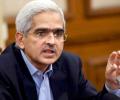
Reserve Bank of India (RBI) Governor Shaktikanta Das had stumped the market in the previous two policies - in August and in October - first with action and then with words. In August, it was the introduction of an incremental cash reserve ratio (I-CRR) to take out excess liquidity, which took the markets by surprise. In October, there was no action. Rather, what is known as "open mouth operation", Das' comment that the central bank might conduct open market operations (OMOs) by selling bonds tempered the euphoria in the bond markets after JP Morgan's inclusion of India in its Emerging Market Bond Index.

There's need to address growth, but weak rupee putting pressure on prices.

The Reserve Bank of India (RBI) is likely to keep monetary policy steady in June despite sluggish economic activity as inflation remains elevated, a Reuters poll showed on Wednesday.

According to fund managers, expectations of a 25-basis-point increase in the cash reserve ratio of banks have heightened in the wake of RBI's surprise twin moves to make short-term money dearer as part of its attempts to curb the rupee's volatility.

RBI likely to cut rate early next year.

The Reserve Bank is unlikely to lower the interest rates.

At Rs 30.88 lakh crore, the currency with the public is 71.84 per cent higher than the level for the fortnight ended November 4, 2016.
The non-food component in the price basket will continue to keep inflation at a high level and result in a "long pause" in interest rates, a foreign bank said on Wednesday. The central bank is likely to pare the pandemic-driven emergency response as well, the report by Singaporean lender DBS said. It can be noted that the high inflation driven by the food prices has forced the RBI to go for a status quo in rates for the three consecutive reviews of the bi-monthly policy meetings, even as growth continues to be in the negative territory.
Tuesday's policy announcement had a regulatory and development component.
The RBI's projections for consumer inflation over the rest of the year indicate some acceleration, with the rate reaching eight per cent in its baseline scenario.

'The assumed linear correlation between forced lower yields, higher bank borrowing from the RBI, higher lending, and higher growth involves leaps of faith, each a step on the quicksand of false beliefs,' warns Debashis Basu.

Head of state-run Indian Bank T M Bhasin had called for a CRR cut.

Real estate loans could become NPAs for banks.
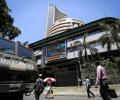
Bank Nifty pared all its intraday gains to end over 1% lower led by losses in BoB, ICICI Bank, Axis Bank and Bank of India

Investors' confidence has been revived in recent weeks on the likelihood the elections will usher in a new government.

On the individual front, housing loan rebate on self-occupied property was increased from Rs 1,50,000 to Rs 2,00,000.
.jpg)
Currently, the cash reserve ratio is pegged at a low of 4 per cent, while statutory liquidity ratio that includes securities such as government bonds, stands at 23 per cent, down from 25 per cent in 2010.

Based on the current momentum, the funds likely to be raised through the RBI's relaxed window would be $3.5 billion-$4 billion.

RBI, in its first bi-monthly monetary policy statement, left the short-term lending rate, or repo rate, unchanged at 8 per cent and the cash reserve ratio static at 4 per cent.
An action on the rate front is unlikely to figure in Rajan's plan for the moment.

'RBI is already late in addressing inflation pressures.'

Observing that MSME sector plays an important role in the growth of the Indian economy, RBI said the restructuring of the borrower account has been extended by further one year to March 31, 2021.
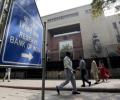
According to Soumya Kanti Ghosh, chief economic advisor of the State Bank of India group, a 50 bps rate cut is a possibility, but 25 bps is more likely.
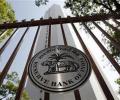
Leeway on CRR and SLR was a long-standing demand from banks, which the RBI did not agree to till recently.

State Bank of India (SBI) may carry out a planned Rs 10,000 crore sale of infrastructure bonds in the market this week, with the securities likely to be of 15-year maturity, sources told Business Standard. SBI, the country's largest bank, had last week said its board had approved the issuance of infrastructure bonds in the current fiscal year. It, however, had not mentioned the maturity of the bonds or when the sale would take place.

RBI has cut the rates thrice so far in 2015 by 25 bps each.

Hawkish tone likely to guard rupee from further slide

The Reserve Bank on Friday superseded the board of the city-based Abhyudaya Cooperative Bank on concerns emanating from "poor governance" and appointed an administrator to manage the affairs of the lender. In what can be seen as a step that should allay depositors' concerns, the central bank did not put any restrictions or moratorium on deposit withdrawals because of the comfort it gets on the bank's finances, according to people in the know. "(The) action is necessitated due to certain material concerns emanating from poor governance standards observed in the bank.

For over a decade, HDFC Bank consistently outperformed industry growth rates in both deposits and advances, maintaining impeccable asset quality. Amid a landscape where other banks struggled with soaring non-performing assets (NPAs), HDFC Bank thrived, eventually surpassing ICICI Bank to become the largest private sector lender in India. Its net interest margin (NIM) remained stable in the range of 4.1-4.4 per cent.
.jpg)
The worst performing Asian currency of the year so far hit a new life low of 61.80 rupees per dollar on Tuesday, breezing past a previous low of 61.21 hit on July 8. Central bank intervention helped the rupee recover, but by Wednesday it was sliding once again, to stand around 61.41 by 1.30 p.m.
HDFC Bank on Monday reported a consolidated net profit of Rs 16,811 crore for the September quarter, its maiden quarterly earnings announcement after merging parent HDFC with itself. On a standalone basis, the largest private sector lender reported a net profit of Rs 15,976 crore. In the year-ago period, the net profit of the merged entity would have been Rs 11,162 crore on a consolidated level while the same on a standalone basis would have been Rs 10,606 crore.

The RBI is expected to cut rates in next policy.
HDFC Bank expects to amalgamate its home loan major parent HDFC into itself by September next year, a top official said on Friday. Both HDFC and HDFC Bank held general meetings on Friday to seek shareholder approvals for what is billed as the largest merger in Indian corporate history at over $40 billion. At the time of announcing the merger on April 4 this year, the entities had said the merger will take 12-18 months.

Reserve Bank of India Governor Shaktikanta Das on Friday said the central bank will ensure adequate liquidity in the system to ease the financial stress caused by the Covid-19 pandemic. The central bank reduced the reverse repo rate -- the rate at which banks park their fund with the central bank -- by 25 basis points to 3.75 per cent.

RBI Governor Raghuram Rajan asked banks to follow suit and pass on the rate cuts.

Investors looking for a fixed-income product that is free of credit risk may invest in these bonds.

Mortgage lender HDFC Ltd on Wednesday announced an increase in its benchmark lending rate by 5 basis points (bps), a move that will make loans dearer for both existing and new borrowers. This is the third hike effected by HDFC in the last one month. "HDFC increases its Retail Prime Lending Rate (RPLR) on housing loans, on which its Adjustable Rate Home Loans (ARHL) are benchmarked, by 5 basis points, with effect from June 1, 2022," the housing finance company said in a statement.
